Tie Gallery
Every Thwap collar starts as a vintage necktie. We hunt them at thrift stores, estate sales, and vintage markets across the Bay Area. This gallery shows the ties we have sourced, the eras they come from, and the patterns that make each collar unique. Once a tie is made into a collar and sold, it is gone forever. If you spot one you like, do not wait.
1950s: The Mad Men originals.
Fifties ties are narrow, textured, and often made from wool or knit silk. The colour palettes lean toward earth tones: mustard, olive, burnt orange, charcoal. The patterns are subtle: small geometrics, tone-on-tone textures, the occasional bold stripe. These make some of our most popular collars because the heavier fabrics hold up well to daily wear and the muted colours look good on almost any dog.
Wool ties from this era produce the sturdiest collars. The weave is dense enough that the fabric does not fray at cut edges, which means a cleaner finish and longer life. We prioritize 1950s wool whenever we can find it in good condition.
1960s-1970s: Bold patterns and wide cuts.
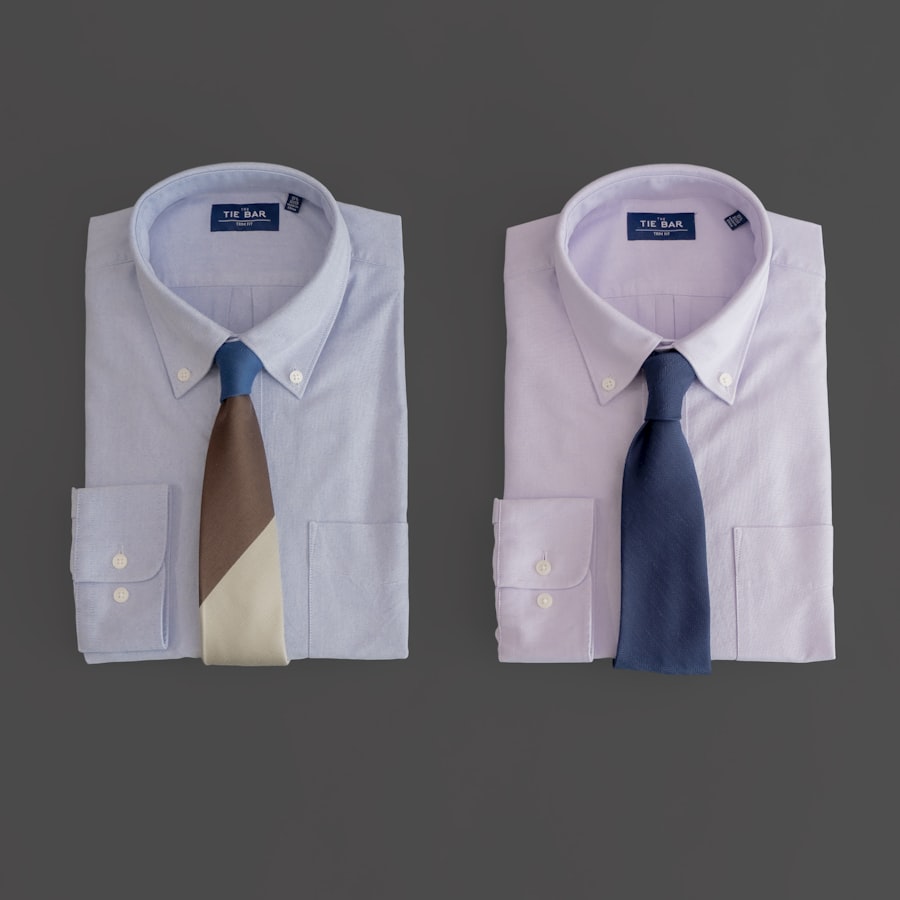
The sixties brought wider ties and bolder prints. Paisleys, large florals, abstract geometrics, and the first wave of polyester. Seventies ties are wider still, with colour combinations that would not pass a modern design review but look incredible on a dog collar. Burnt orange and teal. Avocado green and gold. Deep purple with silver threading.
Polyester ties from this era are divisive among vintage collectors but great for dog collars. The fabric is nearly indestructible, resists stains, and holds its colour through washing. If your dog is rough on accessories, a seventies polyester collar will outlast anything else in the collection.
1980s-1990s: Power ties and novelty prints.
The power-tie era produced wide silk ties in bold solid colours and sharp diagonal stripes. Red, navy, and burgundy dominate. These make clean, classic collars that look almost preppy on a dog. The silk is lighter than wool, so these collars have a different hand: smoother, glossier, more refined.
The nineties also gave us the novelty tie: cartoon characters, food prints, abstract art reproductions, holiday themes. Some of these are too busy for a good collar, but the right novelty tie on the right dog is hard to beat. We are selective here and only keep the prints that translate well at collar scale.
What the fabric means for the collar.
Silk: The most common vintage tie fabric. Produces a smooth, slightly glossy collar with a refined look. Lighter weight, best for dogs who do not pull hard or play rough. Most silk ties come from the 1980s and 1990s.
Polyester: Heavier, more durable, and more stain-resistant than silk. The colours are often bolder. Polyester collars can be wiped clean with a damp cloth and hold up to regular outdoor use. Most polyester ties come from the 1960s and 1970s.
Wool: The heaviest and most textured option. Wool ties produce thick, sturdy collars with a rugged feel. The colours tend to be muted earth tones. Best for larger dogs and cold-weather wear. Most wool ties come from the 1950s and early 1960s.
Knit: Knit ties (usually silk or cotton) have a distinctive texture and a squared-off bottom instead of a pointed one. They produce collars with an interesting visual texture but are less durable than woven fabrics. We use these for smaller dogs and light-duty collars.
The patterns that work best on a collar.
Stripes: Diagonal regimental stripes translate well to collars because the pattern wraps around the neck at an angle. The repeating pattern means every section of the tie looks good when cut to collar length.
Paisley: Complex paisley patterns look busier at tie scale but become more abstract and interesting at collar scale. The smaller the paisley motif relative to the collar width, the better it reads.
Geometric: Small repeating geometrics (dots, diamonds, tiny squares) produce the most consistent collars because the pattern is uniform along the entire length. No matter where we cut, the collar looks intentional.
Solid: A solid-colour vintage tie makes a clean, simple collar that lets the fabric texture do the talking. Good for dogs who already have a busy coat pattern and do not need a competing collar.

Ready to pick a collar? Browse the current collection to see which ties have already been made into collars. For sizing help, read our measuring guide. To request a collar from a specific tie style or era, email us.
Want a specific tie style?
Tell us the era, pattern, or colour you are looking for. We will keep an eye out on our next thrift run.
[email protected]